Icon of Amekaji: The Story Behind Red Wing’s ‘Irish Setter’
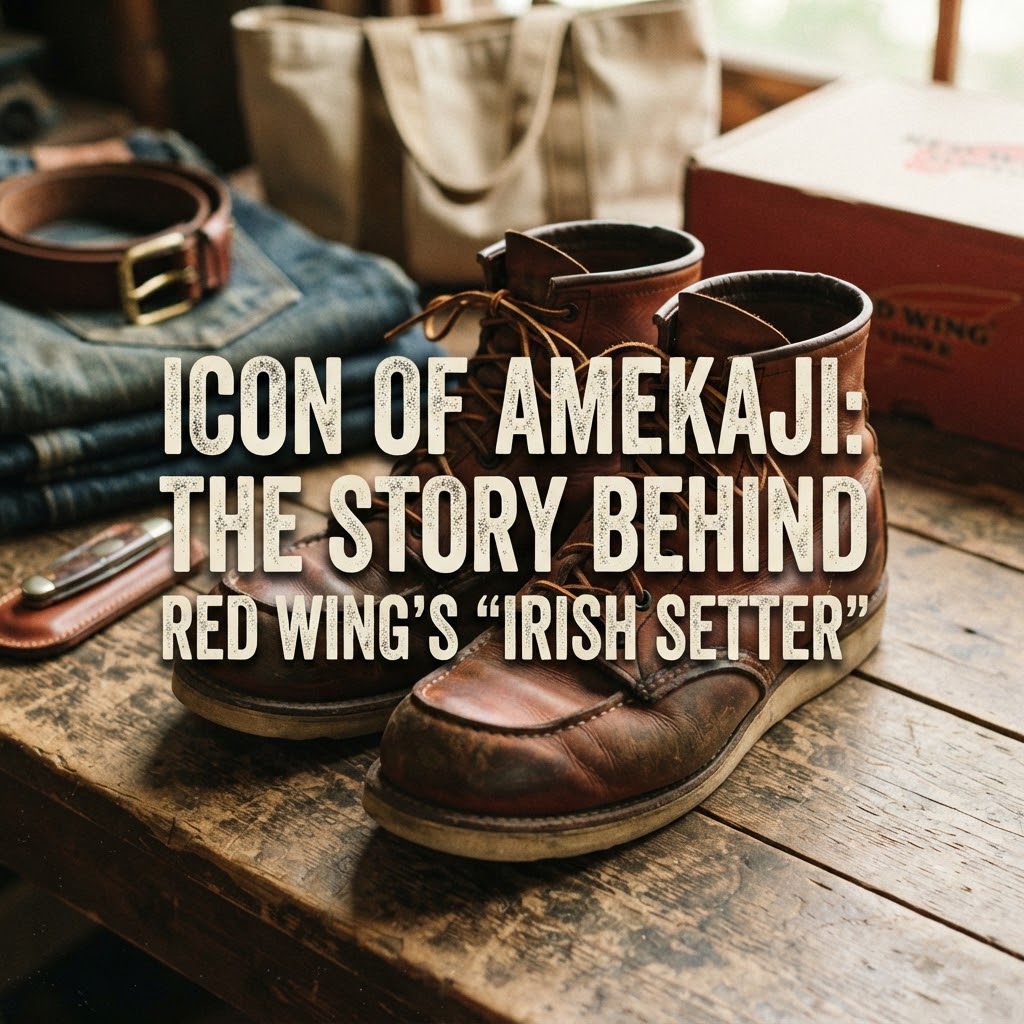
Hello, this is Hiroyasu. I'm a designer in my late 30s who spends his days riding around the streets of Osaka on my bicycle. Thank you so much for taking the time to read my blog as always. Today, I want to dive deep into a pair of boots I’ve cherished for years—the Red Wing "Irish Setter"—and explore its timeless appeal alongside the philosophy behind its details that continues to fascinate us Amekaji (American Casual) fans in Japan.
I previously shared the story of the Red Wing brand as a whole, but for me—and for many fellow American outfit enthusiasts here in Japan—the Irish Setter was likely our gateway into the world of Red Wing. That distinct reddish-orange leather, the recognizable sole shape, and above all, the process of the boots molding to your feet the more you wear them. These aren't just shoes; the term "partner" fits them perfectly as something you journey through life with.
These boots are always with me during my hobbies, whether it's long-distance travel or outdoor trips like camping. Today, I’d like to unpack how the Irish Setter came to be and why it has remained beloved across generations from my own perspective.
The Birth of the Irish Setter: From Hunting Fields to the Streets
The roots of the name "Irish Setter" trace back to the leather color of the original product released in the early 1950s. Because the leather used for these boots closely resembled the reddish coat of a specific dog breed—the Setter (specifically Oro-Russet Portage)—it naturally earned the affectionate nickname "Irish Setter."
When first introduced, these boots were developed for outdoor professionals engaged in hunting or farm work. In harsh environments, there was a demand for high functionality that could protect workers' feet while enduring long hours of activity.
What is particularly noteworthy about this era is that the boots weren't just built tough; they were packed with functional details designed to boost the wearer's work efficiency.
Functional Beauty Hidden in the Moc Toe and White Sole
The iconic details that define the Irish Setter each have clear functional reasons behind them. As a designer, what appeals to me most is precisely this idea: "Function itself becomes aesthetic beauty."
1. Moc Toe (Moccasin Stitch)
This U-shaped stitching (moccasin type) isn't merely decorative. By using this construction, extra room is created around the toe box, providing comfort and reducing pressure even after hours of wear. Furthermore, doubling up the leather over the toe area increased durability, serving to protect feet on rough terrain.
2. Traction Tred Sole
This is the iconic flat, white sole of the Irish Setter. Unlike the chunky lug soles found on typical work boots, this highly cushioned sole had the advantage of allowing hunters to walk quietly in the field. Additionally, because the tread pattern is shallow, it prevents mud and dirt from clogging up the bottom, making it less likely to track dirt indoors—a thoughtful detail designed for workers.
Thanks to this sole, despite the heavy-duty look of the boot as a whole, fatigue while walking is greatly reduced, making it ideal for my daily trips around the city.
The Story of Color: Behind the Creation of Oro-Legacy
When you dig deeper into the history of the Irish Setter, an interesting evolution emerges regarding its signature reddish-brown leather, particularly "Oro-Russet." This highlights a crucial theme in craftsmanship: "the reproduction and continuation of tradition."
Oro-Russet's Gradual Shift Toward Red
Originally, the Oro-Russet leather used on 1950s Irish Setters was a bright, orange-tinted brown. However, due to minor adjustments in oil content and tanning methods, as well as the influence of changing trends over the following decades, the leather tone gradually shifted toward a deeper reddish shade.
The pair I acquired—made with "Oro-Russet Portage"—belongs to this darker reddish family. It has its own strong appeal and ages into a rich, beautiful patina. However, among many fans and collectors, there was a growing desire: "We want the original, bright reddish-orange color from the early days restored."
Returning to the Origins: The Birth of "Oro-Legacy"
In response to these passionate requests, Red Wing Headquarters teamed up with the product planning team in Japan to launch a project aimed at recreating that vivid reddish-brown shade—resembling a setter's coat—using modern techniques.
The result of this effort was today's standard: Oro-Legacy leather. By intentionally controlling the oil content to let the natural character of the hide shine through, they successfully brought back the bright tone of the early years. To me, this demonstrates Red Wing's strong commitment to preserving the brand's identity—the signature color of the Irish Setter—and carrying it into the future rather than letting it be lost to history.
Packed with this much story over a single shade of leather, it's no wonder we can't treat these boots as mere footwear.
20 Years with My Irish Setter in Oro-Russet
My journey with the Irish Setter began back in high school. During the height of an Amekaji boom in Japan, I saved up and bought the classic Oro-Russet Portage model. I still vividly remember the stiff feel of that brand-new leather and its bright reddish-orange hue.
The first few months were pure trial (laughs). I dealt with blisters repeatedly while conditioning the leather with boot oil and breaking them in little by little every day. That sensation of the stiff leather creasing to match my feet and gradually molding to my shape was the absolute joy of nurturing a quality object.
These boots were my go-to footwear when I started my independent design business in Osaka, when I rode my bike along the Yodo River for miles, and when I sat around campfires during outdoor trips. I’ve replaced the white Traction Tred soles at a repair shop several times, and I’ve carefully conditioned parts of the uppers that looked ready to crack over the years.
As a result, my boots today have aged into a deep reddish-brown, presenting a completely unique "Hiroyasu custom" look that is entirely different from the day I wore them in high school. What started as an impulsive purchase back then has turned into a one-of-a-kind tool holding 20 years of my life's footsteps. Caring for and repairing them only deepens my affection. I can confidently say this is the true value of Red Wing products.
Conclusion: The Power of Timeless Design
Red Wing's Irish Setter was originally designed in the 1950s with a clear purpose suited for hunting. Yet, details like the moc toe and Traction Tred sole born from that purpose continue to be celebrated across generations as "masterpieces of functional beauty."
And as shown by the history of its leather color, Red Wing doesn't simply rely on past glory; they continue to honor tradition by researching the most beloved shapes and colors and bringing them back for the modern era. When we put on a pair of Irish Setters, we are taking part in inheriting the spirit of the workers who labored across America's vast lands and the craftsmanship of the artisans who supported them.
Breaking in stiff leather at first can be tough, but that process is precisely the time needed to build deep trust between you and your boots. I hope you'll cultivate your own Irish Setter, enjoy its aging process over time, and engrave your own life story into the leather.
What model was your very first encounter with the Irish Setter? Or if there's a pair you're planning to pick up next, please let me know in the comments section!
Until next time! This was Hiroyasu!