What Is a Coke Stripe Shirt? The History and Design Story Behind an Amekaji Staple
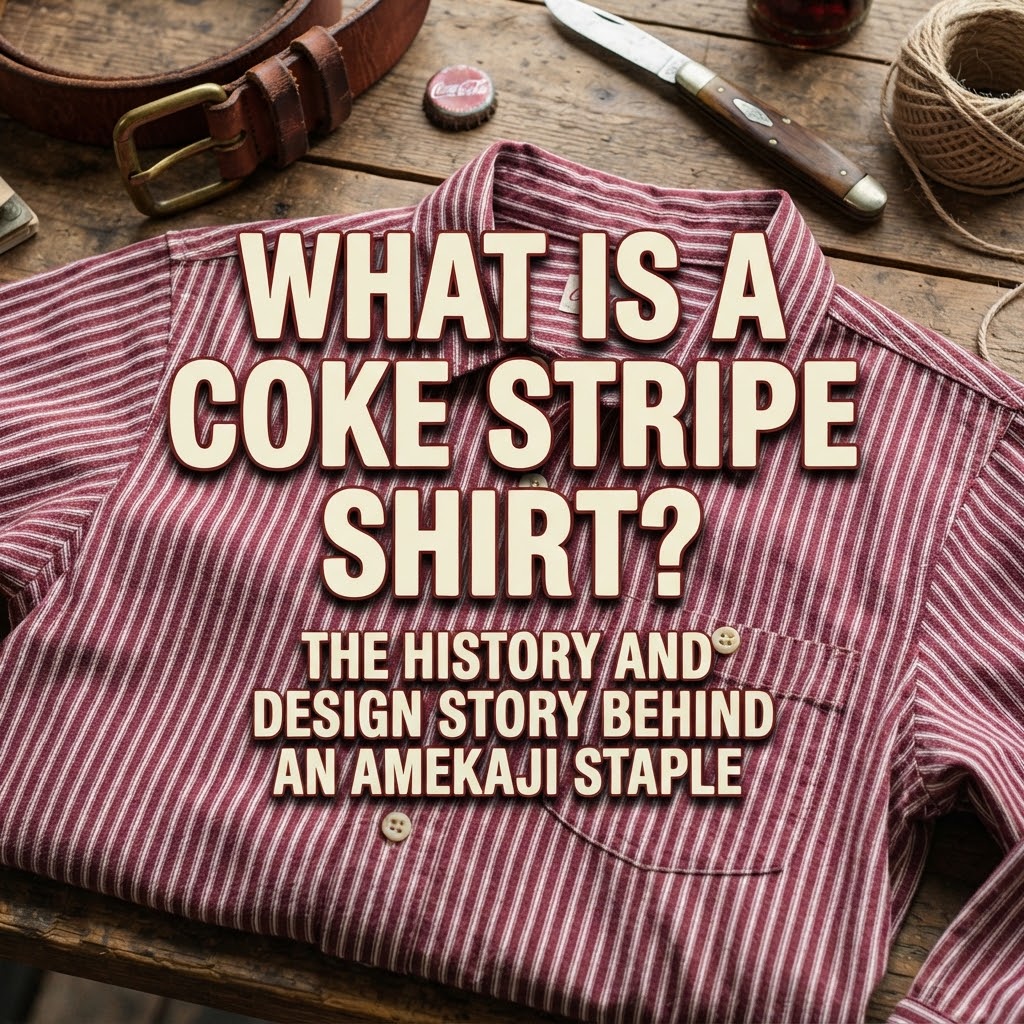
Hello everyone, Hiroyasu here. I am a designer in my late 30s, navigating the streets of Osaka every day. Thank you so much for taking the time to read my blog. Today, I want to dive into an item that almost every American casual ("Amekaji") enthusiast in Japan has probably tried on at least once: the Coke Stripe shirt. I’d like to break down its history, the deeper appeal hidden within its design, and share my perspective on why it holds such a special place in heritage style.
In my daily work as a designer, I frequently find myself thinking about the story behind a product and the intention woven into its details. Whether it is clothing or graphic design, great products are a synthesis of form and function, brought into existence by skilled artisans or born out of practical necessity.
The Coke Stripe shirt is no exception. How did its distinct pattern and rugged yet somehow refined aesthetic evolve through history to become a mainstay in our wardrobes today? It feels like a waste to simply dismiss it as just another standard work shirt. I want to look closely at the philosophy of the makers and the historical era that shaped it, sharing the unique value this piece brings beyond being mere fashion.
The Origins of Coke Stripe: A Unique Name Born from Coca-Cola Uniforms
The fabric used in a Coke Stripe shirt is actually a variation of hickory stripe—a striped work fabric with deep roots in American history. Standard hickory stripe dates back to the late 19th century, originally worn by railroad workers to mask coal soot and grease stains.
However, the specific term "Coke Stripe" took hold in the world of Japanese Amekaji as a distinct category largely because of one major soft drink manufacturer: The Coca-Cola Company.
Functional Beauty Born from Corporate Uniforms
What we now call Coke Stripe fabric became widely recognized between the 1950s and 1960s, when it was adopted for the uniforms of Coca-Cola delivery drivers, salesmen, and plant workers.
- Cleanliness and Approachability: As a beverage maker, Coca-Cola needed workwear that was durable enough for tough manual labor, yet clean and welcoming for staff interacting directly with customers and store owners. Instead of dark, dense hickory stripes, they favored a lighter fabric with a higher ratio of white ground and a slightly wider stripe pitch.
- Practical Utility: While built to withstand hard daily use, the indigo stripes still served to camouflage minor dirt and smudges accumulated on the job.
In short, "Coke Stripe" evolved within the Japanese Amekaji scene as a proper noun referring to a specific style of hickory stripe—one that strikes a balance between corporate image (cleanliness) and workwear utility (durability and stain resistance). This design, born out of the practical requirements of a iconic company, represents the exact kind of functional beauty I find most compelling as a designer.
Workwear History and Decadal Evolution
Because of its exceptional functionality, the Coke Stripe shirt was produced by various workwear manufacturers over time, with fine details evolving across different eras.
1910s–1930s: Establishing Functional Details
This was the era when heavy-duty reinforcement and utilitarian pocket designs became standardized across American workwear.
- Triple Stitching: Three-needle stitching became a primary construction method, offering visual evidence of extreme durability.
- Pockets with Pen Slots: Narrow slots were added to chest pockets specifically to carry writing utensils—a clear example of functional design tailored for real-world labor.
- Chin Straps: Extension collar tabs (chin straps) were introduced to button across the neck, keeping out wind and cold air during harsh outdoor shifts.
1940s–1950s: Expanding Versatility
Following World War II, workwear gradually transitioned from purely occupational clothing into mainstream casual wear. Silhouettes softened slightly while remaining comfortable, moving closer to modern casual fits. Variations emerged that allowed these shirts to be styled across a broader range of everyday settings.
Key Products & Proposals from Modern Reproduction Brands
In modern Japanese heritage fashion, understanding how current brands interpret these historical roots adds immense depth to styling. Here are a few notable brands and products that recreate or reinterpret Coke Stripe and hickory work shirts with deep attention to detail.
1. SUGAR CANE: Faithful Reproductions and Storytelling
SUGAR CANE, a brand under Toyo Enterprise, is dedicated to studying vintage American workwear from its golden era and reproducing those historic fabrics and construction methods with extreme accuracy.
- COKE STRIPE WORK SHIRT (SC28652 / SC38699, etc.)Features: Their Coke Stripe shirt is directly modeled after the uniforms used by Coca-Cola workers during the 1950s and 1960s.My View: This isn't just a surface-level reproduction. SUGAR CANE analyzes deadstock vintage garments in their archive and weaves the fabric on traditional shuttle looms. Knowing this level of commitment makes you stand a little taller every time you put the shirt on.
2. BIG MIKE: Heavy-Duty Reimagining
Originally founded in the United States in 1890, BIG MIKE has been revived through Japanese planning, bringing back the rugged manufacturing philosophy of the past for contemporary wearers.
- Hickory Stripe Work Shirt (Lot/101815005, etc.)Features: Heavyweight fabric with a satisfyingly sturdy hand-feel and a classic boxy silhouette. The cut retains an authentic workwear feel while being adjusted for modern proportions.My View: I love the immediate sense of heavy-duty reliability when wearing a BIG MIKE shirt on its own. The tough fabric gives you confidence that it can handle constant wear.
3. Pherrow's: Showcasing Japanese Craftsmanship
Pherrow's is a long-standing Japanese reproduction brand known for its high technical standards and obsession with minor construction details.
- Hickory Stripe Work Shirt (770WS, etc.)Features: Faithfully incorporates vintage features like side hem gussets, chainstitch run-offs (karakan), and triple-needle seams.My View: By prioritizing Japanese production, Pherrow's offers a fit that works comfortably for Japanese body types and uses high-grade fabrics that age beautifully. The precise sewing by Japanese craftsmen lends a refined elegance to an otherwise rugged shirt.
Styling the Coke Stripe Shirt: Functional Beauty for Adults
Given its utilitarian origins, some might assume the Coke Stripe shirt is difficult to style in a mature way. In reality, it is surprisingly versatile. For those of us in our late 30s and beyond, the key lies in striking the right balance between cleanliness and relaxed casualness.
Here are three styling approaches I practice in my daily routine as a designer to bring out the best in a Coke Stripe shirt:
1. Weekend City Strolls: Adding Refinement
The goal here is to retain the shirt's inherent toughness without looking out of place in an urban setting.
- Bottoms: Pair the shirt with slim-fit chinos or dark-toned trousers featuring a clean center crease. Wearing overly baggy pants or heavily distressed denim can easily make the overall outfit look untidy. The vertical lines of the Coke stripe complement the vertical line of a trouser crease, creating a sharp profile.
- Shirt Layering: During seasonal transitions, wear the shirt open over a plain white T-shirt like light outerwear. Leaving the front unbuttoned adds airiness and a relaxed feel.
- Footwear: Choose footwear with traditional roots, such as leather postman shoes or polished loafers. This softens the gritty image of the work shirt just enough.
2. Casual Work Wear: Elevating Through Layering
In my design workplace, I don't need to wear a formal suit, but I like outfits that reflect thoughtful composition. A Coke Stripe shirt works wonderfully as an inner layer.
- Inner Layer Accent: Wear a cotton knit cardigan in a calm tone like navy or olive, or a classic Harrington jacket, over the shirt. Allowing the stripe pattern to peek out at the chest adds a subtle focal point to the look.
- Texture Contrast: Combining the crisp structure of a Coke Stripe woven shirt with rich, heavy textures like melton wool creates a satisfying material contrast.
- Accessories: Pair with well-aged leather goods (such as a leather tote bag) or simple silver jewelry to raise the overall tone of the outfit.
3. Mindful Color Contrast: Smart Cohesion
Coke Stripe fabric is defined by its crisp contrast between light grounds and indigo lines. Keeping the rest of your outfit's color palette restrained lets that contrast shine naturally.
- Color Rule: Limit the rest of your outfit to five classic neutral shades: white, black, navy, olive, and beige. This simple rule ties the entire look together effortlessly.
- Accent Colors: If you want to introduce a pop of color, keep it minimal—a bandana tucked into a pocket or a leather belt in earth tones like deep red or mustard yellow, colors historically common in vintage workwear.
Conclusion: What the Coke Stripe Shirt Tells Us
Exploring the Coke Stripe shirt reveals why heritage clothing remains so engaging. For many of us in our late 30s in Japan, Amekaji isn't just a fleeting trend; it's a living fashion culture that we've grown up alongside.
The Coke Stripe pattern originated from a very specific commercial purpose—a uniform for Coca-Cola workers. Yet the functional design that emerged from that practical need is precisely what continues to captivate us decades later.
Furthermore, I feel immense respect for modern Japanese heritage brands that refrain from making superficial copies. Instead, they delve deeply into original fabric structures, historical sewing methods, and the narrative behind the garments. Their sincere approach to manufacturing satisfies our desire for genuine quality.
When I wear a Coke Stripe shirt, I feel a quiet sense of appreciation for the history of American labor wear and the craftsmanship required to bring it into the present day. I hope you'll take a moment to look closely at the details of the Coke Stripe shirts in your own wardrobe. Thinking about where those designs came from turns a simple piece of clothing into a companion with a story.
If you have a favorite Coke Stripe item or insights into vintage workwear details, feel free to share your thoughts in the comments!
Until next time—Hiroyasu out!