Red Wing Shoes: The Timeless Bootmaker Supporting Workers for Over a Century
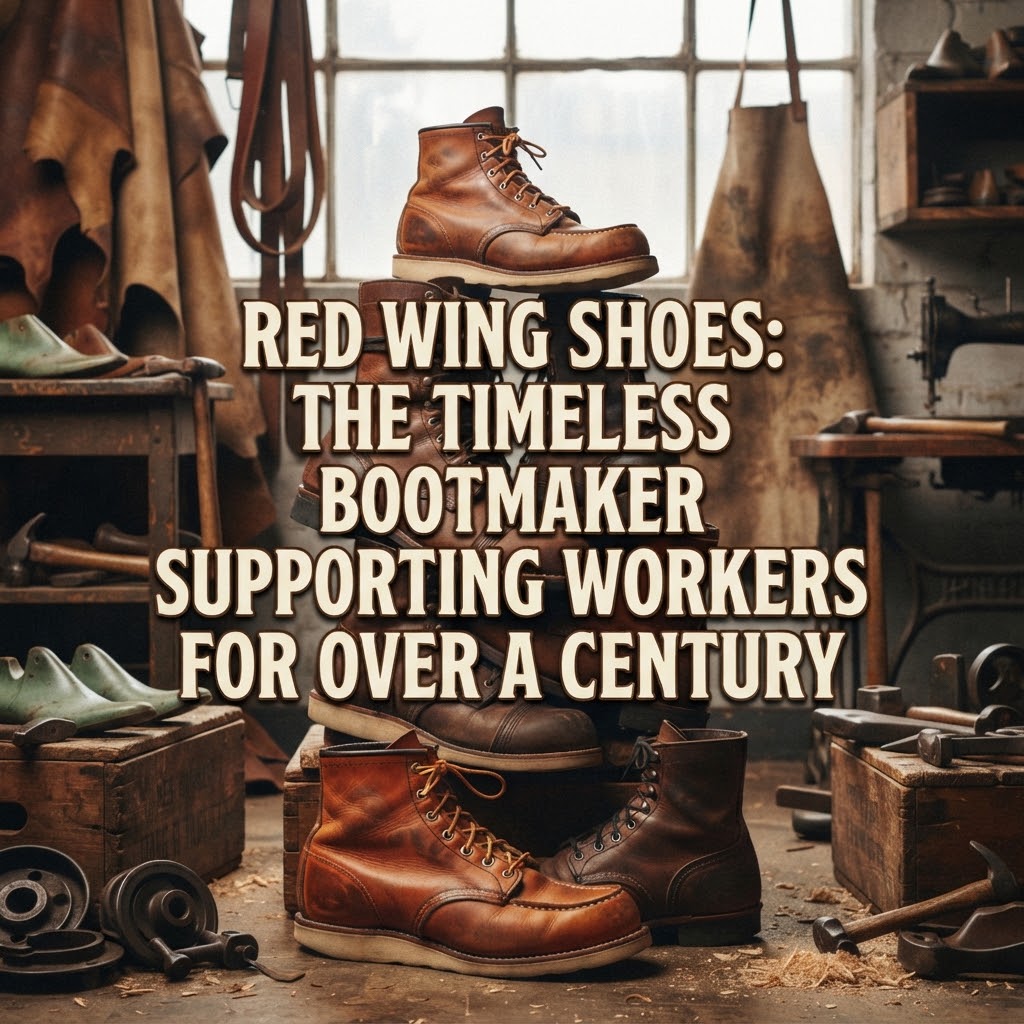
Hello, everyone! Hiroyasu here—a designer in my late 30s who spends his days cycling through the vibrant streets of Osaka. To all my regular readers, thank you so much for stopping by. Today, I want to dive deep into Red Wing Shoes, a true monument in the world of American work boots, exploring the unique appeal and philosophy that keep us Amekaji (American Casual) fans continually hooked.
As someone involved in design and manufacturing, I have a deep appreciation for products that manage to merge high functionality with aesthetic beauty. Red Wing boots are the absolute pinnacle of this balance. They go far beyond being just "sturdy footwear"—they become true companions that etch the wearer's way of life into the leather over time.
For my personal hobbies like bikepacking and camping, their rugged construction withstands tough outdoor environments while bringing an unmistakable presence when paired with denim or chinos. Why has this brand earned such unwavering support from enthusiasts worldwide for over a century? Allow me to share my perspective while tracing Red Wing's remarkable roots.
Born in Minnesota: Boots Crafted for Workers
The history of Red Wing Shoes began in 1905 in Red Wing, Minnesota. The founder, Charles Beckman, was the son of a German immigrant who ran a local shoe retail business.
Dissatisfied with the quality of footwear available at the time, Beckman was driven by a strong conviction to provide truly good shoes to working men, leading him to establish the company alongside ten investors. America was undergoing rapid industrial growth, with demanding fields like oil drilling, railroad construction, and logging requiring tough, long-lasting footwear to protect the workers' feet.
Red Wing grew precisely by answering this demand. Early products featured simple yet exceptionally durable leather, paired with rugged construction techniques like the Goodyear welt method executed by skilled craftsmen. This unwavering founding principle—to build the finest footwear for workers—remains the core foundation of Red Wing products to this day.
A Uncompromising Commitment to Craftsmanship Across Generations
The unique charm of Red Wing boots comes from their remarkably consistent approach to manufacturing.
1. In-House Manufacturing in the USWhile many brands have shifted their manufacturing offshore, Red Wing continues to produce the majority of its boots in and around its hometown of Red Wing, Minnesota. This commitment ensures rigorous quality control and the preservation of skilled craftsmanship across generations.
2. No Compromise on Leather QualityLeather quality is the heart and soul of Red Wing. The brand owns its own tannery, the S.B. Foot Tanning Company, where most of the leathers used for their boots are produced. Understanding the exact characteristics of the raw materials to achieve the best possible finish is a passion that I, as a fellow designer, deeply respect.
3. The Pursuit of Functional BeautyRed Wing boots are free from flashy, unnecessary decorations. Yet, within their straightforward designs lie thoughtful features intended to maximize safety and comfort. Take, for example, the Traction Tred sole made famous by the Irish Setter. This flat, cushioned wedge sole was designed to prevent dirt and mud from tracking onto factory or construction floors while reducing fatigue during long hours on your feet. That seamless connection where function directly dictates aesthetic beauty is one of the main reasons I love this brand.
The Complementary Roles of US HQ and Red Wing Japan
Red Wing's global success stems from the brand's persistent commitment to quality maintained by its US headquarters, alongside tailored international strategies—particularly the key contributions from the Japanese market.
Red Wing Shoe Company (US Headquarters)Located in Red Wing, Minnesota, the headquarters has overseen production and quality control for over a century. Their primary role is guarding the founder's spirit by preserving traditional methods like Goodyear welt construction and utilizing premium leathers from their proprietary tannery. By treating boots as vital tools for workers rather than fleeting fashion items, they built global trust. They guarantee rugged durability and a repairable design that makes long-term wear possible.
The Role of Red Wing JapanIn Japan, Red Wing evolved beyond practical workwear to become a central pillar of Amekaji subculture. Leading this movement is Red Wing Japan. The Japanese market possesses a unique culture of deeply appreciating product quality, craft heritage, and historical narrative. Red Wing Japan acts as a bridge: providing feedback for developing lasts tailored to Japanese feet and proposing faithful re-issues of archived heritage models in collaboration with the US team. While manufacturing remains firmly anchored at the US factory, Japanese market insights directly contribute to the evolution of the product line—a fascinating synergy between American heritage manufacturing and Japanese cultural sensibility.
Iconic Red Wing Boot Models
Here are several flagship models that embody Red Wing's philosophy. Notice how each boot originated from specific historical contexts and worker requirements:
- Irish Setter (Moc Toe) (e.g., 875, 8875)The undisputed icon of Red Wing, introduced in the 1950s as a hunting boot. The original Oro-Russet leather featured a reddish-brown tone resembling the coat of an Irish Setter hunting dog, giving the boot its legendary nickname. Featuring a U-shaped stitched moc toe and a white, cushioned Traction Tred wedge sole, it provided comfort for long shifts while resisting mud buildup. Combined with durable leather, it evolved into a timeless staple of vintage and casual style.
- Round Toe (e.g., 816x, 9111)Alongside the Moc Toe, the Round Toe represents one of the simplest early work boot silhouettes. With its clean, unornamented toe cap, this style served as everyday footwear for various trades long before the Irish Setter arrived. Its minimalist design allows the leather texture and patina to take center stage. Models equipped with comfortable soles make excellent daily walking and riding boots—ideal for when I'm cruising around Osaka on my bike.
- Beckman Boot (e.g., 901x, 941x)Named after founder Charles Beckman, this line was created to reflect the versatile boot Beckman himself needed in early 20th-century Red Wing City—refined enough for business, yet tough enough for daily work. Made primarily with lustrous Featherstone leather, it strikes a perfect balance between rugged utility and classic dressiness, pairing effortlessly with denim or tailored wool trousers.
- Engineer Boot (e.g., 2991, 2268)Developed in the 1930s for railroad engineers, this pull-on boot features a laceless design and high shaft to protect feet from hot coal steam, oil, and embers. The instep strap provides an adjustable fit to keep the boot secure. Its tough aesthetic was later embraced by biker and rocker subcultures, with Black Chrome leather models defining the classic rugged look.
- Lineman Boot (e.g., 2995, 2996)Designed specifically for linemen working on electric and telephone lines. To ensure maximum stability when climbing high utility poles, the laces extend close to the toe (lace-to-toe design). This allows the wearer to tighten the boot uniformly across the entire foot, ensuring safety during high-altitude work.
- Postman Service Shoe (101)Adopted in the 1950s as official footwear for US Postal Service mail carriers and police officers. Designed for workers who walked miles daily, it combined durability, cushioned comfort, and a neat appearance that suited uniforms. Featuring a flat wedge sole and water-repellent Chaparral leather, its sleek design seamlessly integrates into modern smart-casual wardrobes.
- Pecos Boot (e.g., 816x, 8845)Introduced in the 1950s for Texas oil workers and cowboys, the Pecos is a Western-style pull-on work boot with side pull straps for easy entry. Named after a town in Texas, its clean, laceless design kept dirt out and suited ranch and oil rig conditions. It offers a distinct, lean, utilitarian silhouette separate from the heavier Engineer boot.
- Chelsea Boot (e.g., 2922)A more modern addition to the lineup, featuring elastic side gores for effortless slip-on functionality. While originally a Victorian riding boot adapted in Europe, Red Wing's version infuses true workwear heritage using thick leathers and sturdy Goodyear welt construction.
- Weekender (e.g., 330x)A lightweight, flexible collection designed for casual off-duty wear. Departing from traditional heavy boot construction, it delivers sneaker-like comfort without losing classic Red Wing style. It is tailor-made for active weekends, city cycling, and light travel.
My 20-Year Journey with the Oro-Russet Irish Setter
My personal journey with Red Wing started back in high school when I first discovered American casual style. My very first purchase was the classic Irish Setter in Oro-Russet Portage leather. The moment I laid eyes on that warm, reddish-orange brown leather, I was hooked.
I saved up my part-time job earnings to buy what I considered a true "buy-it-for-life" item. More than 20 years later, that very same pair is still in my active rotation. Over two decades, I've resoled them multiple times, carefully conditioned the leather through dry spells, and replaced worn boot laces over and over again.
Through rain, snow, daily bicycle commutes around Osaka, and trips across Japan, these boots have been by my side. Today, the leather displays a rich, deep patina with creases perfectly molded to my feet. They feel like a physical photo album documenting two decades of my life.
It is precisely because Red Wing builds boots meant to be repaired and maintained that my original pair continues to support my steps today.
Conclusion: Stories Written in Leather
At the heart of Red Wing Shoes is a deep honesty toward craftsmanship that ignores short-lived trends. To me as a designer, it represents the ideal form of functional beauty. Their century-old philosophy of delivering uncompromising quality while responding to workers' practical needs still resonates strongly with modern consumers.
Wearing Red Wing boots allows us to feel that rich heritage with every step. The true magic of these boots lies in co-creating a story through the aging process—what we in Japan call 経年変化 (keinen henka). A brand-new pair is merely the prologue. Rain marks, scuffs from bikepacking trips, and the deep sheen built from years of care all link back to personal life events, transforming mass-produced boots into a one-of-a-kind custom piece.
Their repairable Goodyear welt construction embodies a genuine culture of sustainability. With proper care, a pair like my high school Irish Setters can easily be handed down to the next generation. If you don't own a pair yet, I encourage you to welcome a Red Wing boot into your life as a lifelong companion. You'll fall in love with the rich leather, the broken-in comfort, and above all, the personal story you will etch into them over time.
If you were to pick up your first pair of Red Wings, which model would you choose? And for long-time owners, what stories have your boots collected? Feel free to share your thoughts in the comments below!
Until next time, this is Hiroyasu signing off!